
Why Your K-Beauty Lip Tint Looks Different on Your Lips
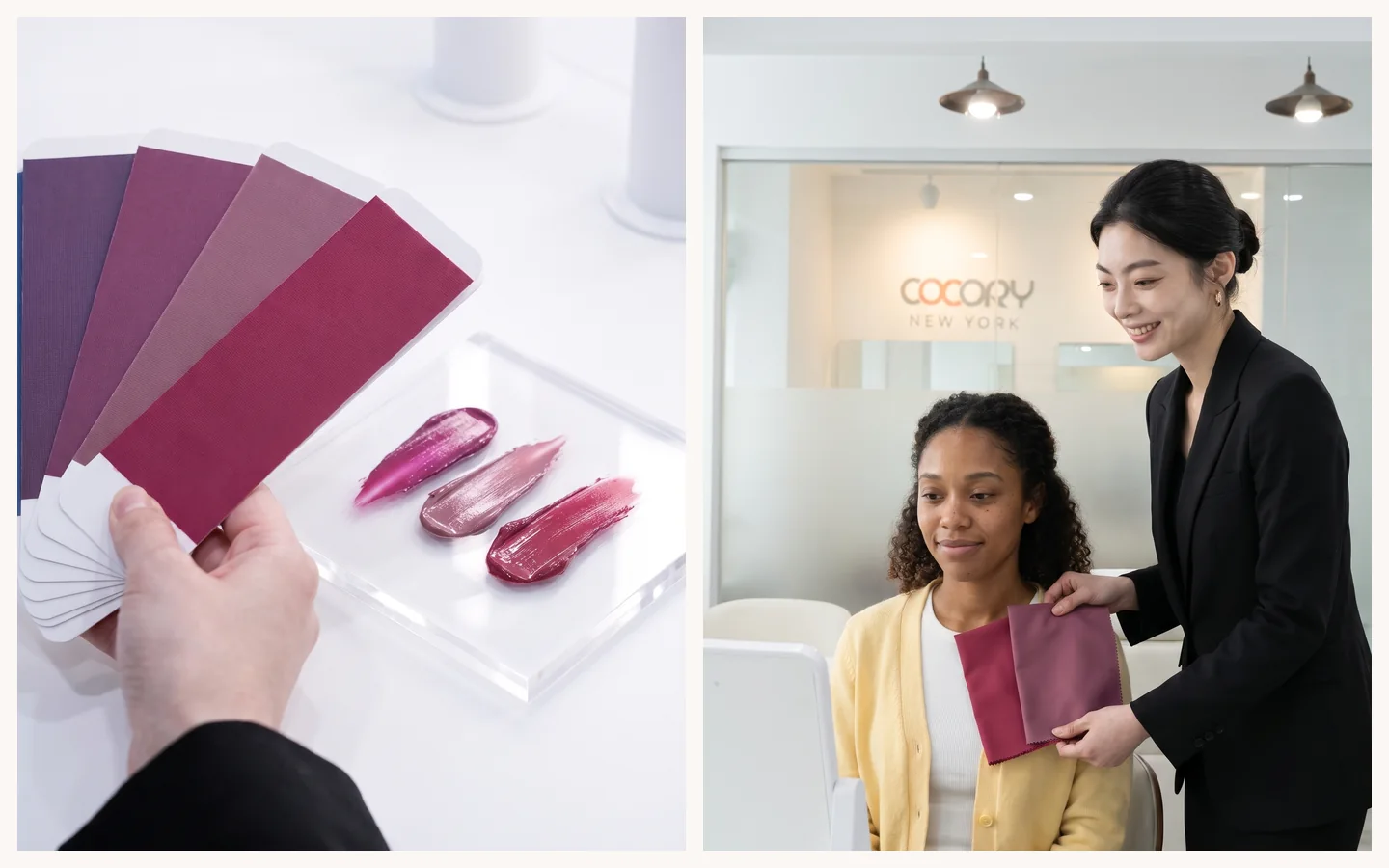
The shade looked exactly right on screen. In product photography, or even on a friend standing right next to you, it read as an effortless, soft rose-berry. Yet the moment you applied it to your own lips, it turned brighter, grayer, or noticeably deeper than expected.
If you have ever shopped for Korean lip tints, you have likely experienced this quiet disconnect. A shade labeled “muted fig,” “soft mauve,” or “neutral rose” can look calm and balanced in the tube, only to shift once it meets the face.
The formula did not necessarily fail. Lip color simply never exists in isolation; it is always read in relationship to the natural pigment of your lips, the surrounding complexion, and the light in which you wear it.
Why a Wrist Swatch Rarely Matches Your Lips
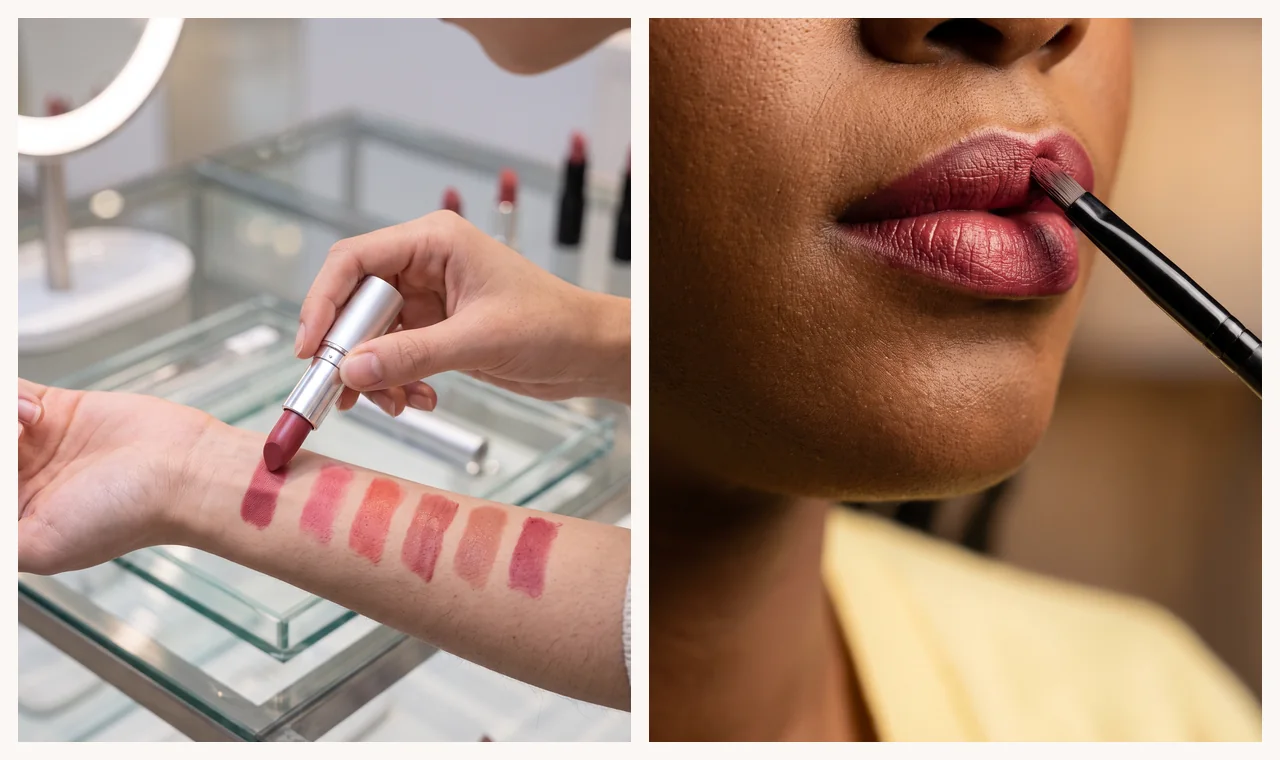
When comparing lip products at a beauty counter, our first instinct is almost always to swatch six or seven shades in a neat row along the inner wrist. While a wrist test is useful for checking texture and finish, it is a surprisingly unreliable predictor of how a lip tint will behave on your lips.
There are three practical reasons why wrist swatches and lip color diverge:
- Natural Lip Pigmentation vs. Inner-Arm Skin: The skin on your inner wrist is relatively uniform and far less vascular than your lips. Your natural lip tone already contains its own baseline of red, violet, rose, or warm beige pigment.
- Sheerness and Formula Coverage: Unlike a high-opacity matte lipstick that sits like an opaque layer over the lips, many K-beauty water tints, glow tints, and sheer velvet formulas are designed to be translucent. Instead of replacing your natural lip color, they blend with it like a watercolor glaze.
- Retail Store Lighting: Depending on a store’s lighting temperature and color-rendering properties, overhead LEDs or vanity lights can alter how warm, cool, or muted a pigment appears. A tint that looks balanced under retail lighting can read noticeably different once you step outside into natural daylight.
How Natural Lip Color, Undertone, Value, and Opacity Interact
When a lip tint looks slightly off, the most common assumption is that you chose the wrong temperature, such as a warm shade instead of a cool one. Yet as we explore in Warm vs. Cool Is Only the Beginning, undertone is only one variable among several.
In COCORY’s multi-dimensional analysis, how a lip color reads on the face depends on the interplay of lightness (value), chroma (saturation), undertone, clarity (clear vs. muted), natural lip pigment, and facial contrast.
Consider how three shades within the exact same berry family behave on different complexions:
- Cool Blue-Plum Berry: High in clarity and cool in temperature. On a cool complexion with moderate-to-high contrast, it can make the complexion appear clearer. On a warmer complexion or naturally deeper lip tone, the blue base can appear disconnected from the complexion and make the lips look overly sharp.
- Soft Dusty Mauve: Lower in chroma with a muted, grayish softness. If your natural lips carry strong violet or cool pigmentation, a sheer mauve tint can amplify that coolness and read overly gray. On someone whose complexion harmonizes with soft, low-saturation tones, however, it looks effortlessly refined.
- Rich Warm Raspberry or Rosewood: Balanced in depth with a warmer red-berry core. For a warm complexion with medium-to-deep facial contrast, this variation delivers the richness of a berry lip without the cold edge of a blue-based plum.

Formula coverage determines how strongly your natural lip color influences the final result. When a formula is sheer, your underlying lip pigment shows through and changes its apparent depth and hue, which is why a translucent peach-coral or pale pink water tint can look quite different from the shade shown on a pale studio backdrop. As opacity increases, a higher-coverage formula masks more of your natural lip color, allowing the applied shade to appear closer to its intended color.
Three Things to Check Before Buying Your Next Lip Tint
Understanding why lip color shifts makes beauty shopping far more intentional. Before adding another tube to your makeup bag, three simple checks can reduce the risk of choosing a mismatched shade:
- 01. Read the Opacity alongside the Shade Name: Ask whether the formula is a sheer glossy stain, a buildable water tint, or an opaque velvet cream. The sheerer the formula, the more your natural lip color will steer the final result.
- 02. Compare Depth and Clarity, Not Just “Warm” or “Cool”: If a popular rose or coral tint feels overwhelming on your face, the issue is often chroma (too bright) or value (too light or too dark) rather than temperature alone. Look one step softer in saturation or one step deeper in tone within the same color family.
- 03. Evaluate the Shade in Neutral Daylight Near Your Face: Whenever possible, observe how the color interacts with your entire face, including your eyes, skin clarity, and jawline shadow, in neutral daylight rather than relying solely on a stripe across your wrist under store spotlights.
From Studio Analysis to Your Everyday Makeup Bag
Translating color theory into actual products is often where the real questions begin. Knowing your seasonal direction is helpful, but standing in front of dozens of lip tints, lipsticks, liners, and glosses still requires discerning subtle differences in depth, finish, and intensity.
At COCORY New York, our Signature Personal Color Analysis brings together professional fabric draping, controlled lighting, and objective skin color measurements using the COCORY CUBE™. The experience extends into personalized makeup and lip color guidance, along with a thoughtful review of the products already in your beauty collection.
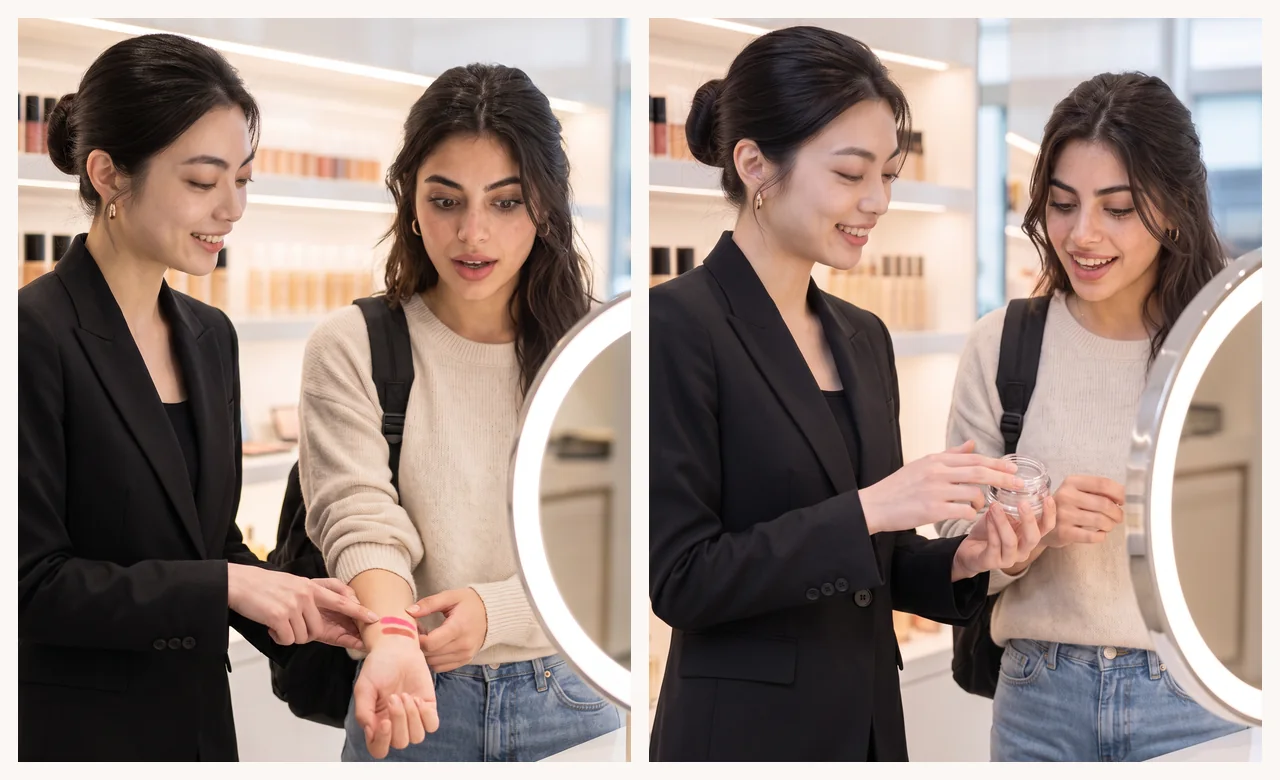
For clients who want guidance while shopping, our In-Store Beauty Concierge combines a private beauty consultation with a guided Sephora experience, helping you explore and compare lip shades, finishes, and other beauty essentials in relation to your natural features and personal aesthetic.
COCORY New York
Korea’s No.1 Personal Color Analysis Brand — Now in New York City.
Discover the Shades That Work With Your Complexion
A private consultation combining precision draping, measured skin data, and personalized makeup and wardrobe color curation.